How Professionals Bet on Sports
There are two primary approaches in sports betting: top-down betting and bottom-up betting. Both strategies aim to identify profitable betting opportunities, but they do so in different ways. Top-down betting involves following market signals, while bottom-up betting focuses on building your own numbers and finding market inefficiencies.
This article will explore these two approaches, discuss how professionals combine them, and help you decide which one best fits your betting style and goals.
What is Top-Down Betting?
Top-down betting is a market-reactive approach. Bettors who use this strategy look at market trends, line movements, and sharp money to inform their bets. Instead of building their own models, top-down bettors follow the signals from the market to guide their betting decisions. Positive EV betting tools also help top-down bettors use the market to their advantage.
How Top-Down Betting Works:
Market Signals: Top-down bettors track sharp money, which refers to large bets placed by professional bettors. By following these market signals, they can predict where the market is heading.
Line Movement: Top-down bettors also focus on line movement. If the line shifts drastically, it may indicate that sharp money has influenced the market, signaling a potential betting opportunity.
Betting the Consensus: Sometimes, top-down bettors align their bets with the market consensus, particularly if they believe the public is overreacting to news or events
Example: If the line on a college basketball game shifts significantly in favor of one team, a top-down bettor may take that as a signal to place their bet, assuming that the sharp bettors have identified value in that side.
Related Reading
1
Sharp Sports Betting Explained
2
Reverse Line Movement Explained: What It Means for Bettors
3

What is Bottom-Up Betting?
Bottom-up betting is a data-driven approach. Bettors who use this strategy focus on building their own numbers and using statistical models to identify market inefficiencies. Unlike top-down bettors, who rely on market movements, bottom-up bettors originate their own lines and seek out mispriced odds.
How Bottom-Up Betting Works:
Modeling: Bottom-up bettors create models that are based on team stats, player performance, and historical data. These models help predict the likely outcome of a game or event and identify value bets.
Finding Inefficiencies: Bottom-up bettors focus on finding inefficiencies that sportsbooks have missed. This might include situations where the market has overvalued a team or mispriced a prop.
Building a Strategy: Bottom-up bettors build structured frameworks around their models, continuously refining inputs and testing predictions against actual outcomes to improve accuracy over time
Example: A bottom-up bettor might use data to build a model that predicts NFL game outcomes based on offensive stats, defensive rankings, and team matchups. If their model gives a different prediction than the market, they may place a bet on the underdog or over/under.
Related Reading
1
Player Prop Projections: Using Data for Projecting Lines
2
AI Betting: How AI Sports Betting Tools Actually Work
3
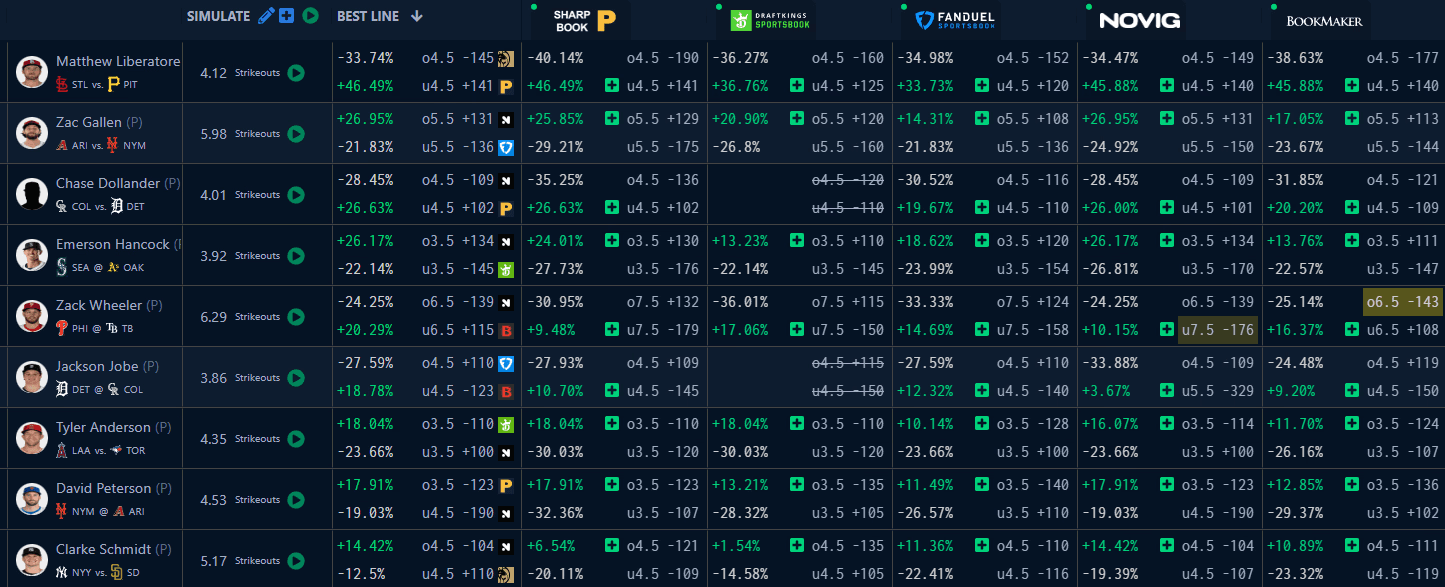
How Professionals Combine Both Approaches
Professional bettors often combine both top-down and bottom-up strategies to enhance their profitability. While top-down betting reacts to market movements, bottom-up betting is focused on creating predictive models. Professionals can maximize their edge and adapt to changing market conditions by using both strategies together.
Why Combining Both Approaches Works:
Flexibility: Bettors can adjust their strategy as needed by using top-down betting to follow market movements and bottom-up betting to identify inefficiencies.
Risk Management: Combining both methods allows bettors to exploit market trends and use models to pinpoint value bets.
Increased Profits: The synergy between top-down and bottom-up betting increases the chances of finding +EV opportunities and minimizing risk over time.
Example: A professional bettor might use top-down betting to follow sharp money on NBA point spreads while building their own model for player props. This allows them to combine market signals with their own insights to find the best bets.
Related Reading
1
Elite Sports Betting: What Separates Profitable Bettors
2
How to Make a Living Sports Betting: What It Takes
3
Which Betting Approach is Right For You?
Choosing between top-down and bottom-up betting depends on your betting style, resources, and goals. Here’s how each approach fits different bettors:
Top-Down Betting:
Best for: Bettors with access to market data, track line movements, and understanding of how to interpret market signals.
Ideal for: Professional bettors who are good at reacting to sharp money and understanding market trends.
Requires: Less time for data analysis but a solid understanding of market behavior and sharp money signals.
Bottom-Up Betting:
Best for: Bettors who have strong data analysis skills and enjoy building models.
Ideal for: Professional bettors who want to originate their own lines and bet on mispriced odds.
Requires: More time for data analysis and strong modeling skills, but offers the ability to originate your own lines independently.
Example: A top-down bettor might track the movement of lines on NFL spreads, while a bottom-up bettor might build a model using team stats, player data, and injuries to predict the point spread more accurately.
Related Reading
1
Betting Strategies: Proven Approaches to Sports Wagering
2
How to Win at Sports Betting: A Process-First Guide
3
Related Reading
1
2
3
1
Find the Approach That Fits You
Top-down betting follows market signals and sharp money to identify value. Bottom-up betting builds independent projections and looks for mispriced odds. Both approaches have merit, and professionals often combine them to maximize their edge. The right choice depends on your skills, resources, and how much time you want to invest. If you are comfortable with data analysis and modeling, bottom-up gives you independence from the market. If you prefer reading market movements and reacting to sharp action, top-down is a strong fit. Either way, discipline and process are what make the strategy work. You have completed the Advanced course. The Expert course covers bankroll management at scale, market access, AI and automation, risk diversification, and what it takes to run a professional betting operation.
2
3