Empire Sports Exchange (ESX) Review for 2026
Your side is up two scores in the third quarter and the bet is all but won. The sportsbook still offers you one cash-out number and quietly keeps the difference. Empire Sports Exchange cuts out that middleman. Your position carries a live price and an order book with real buyers on the other side, so you decide what an early exit is worth.
ESX is a sports prediction market where you buy and sell contracts on outcomes at market prices rather than taking a fixed number from a house. What separates it from most sports prediction markets is how hard it leans into trading. The markets screen reads like a brokerage terminal, with candlestick charts, volume, and a live order book sitting next to the game. The first time I opened it, I checked the spread before I picked a side. That is exactly the habit the platform is built to reward.
ESX opened real-money trading in the spring of 2026 and is still a young venue. In a July 2026 interview, co-founder Frank Li said the exchange runs on crypto rails and is closed to US users while the company pays for legal work toward a US app, so check whether you can trade from where you are before you weigh anything else here. The company also set a $1 million monthly volume target for the NFL season. Five weeks in, how close the book gets to that number decides how much size you can move on any given line. Below, I break down what a trade really costs against standard sportsbook juice, the sports-built indicators that make the terminal worth learning, where liquidity falls short, and the free Replay mode that lets you practice before you fund.

What Is ESX? A Sports Prediction Market Built for Traders
ESX is a peer-to-peer sports prediction market. You trade contracts on outcomes against other users instead of betting into a book's margin, and prices move as the market's collective opinion shifts. A contract priced at 60 cents implies roughly a 60 percent chance of the outcome, and it settles for a dollar if it hits or nothing if it misses. No house sets the line, which is the core difference from a traditional sportsbook.
The audience it targets is the semi-professional trader who wants to work a position during the game rather than lock one in before kickoff, using charting and infrastructure normally reserved for trading desks. In practice that means live game data next to market prices, candlestick charts, volume, order books, and technical indicators applied to both the market and the sport, including scoring momentum. It also runs original micro-markets such as Heads-Up, Milestone, Rankings, and leverage markets, which give you more angles than a moneyline or total.
Because it works like peer-to-peer betting, the value shows up in price and structure rather than promos and packaging. You are matched against other traders, you can exit a position early, and low fees leave more of your edge intact. The market menu on the busiest events is broad for a young exchange: a single soccer match page can carry a three-way moneyline, a Team to Advance market, spreads with alternate lines, and totals. Breadth is not the same as depth, though, and the size resting on each of those lines is still thin. Where ESX sits differently from an established venue like Kalshi is regulation. ESX is not a CFTC-designated exchange, and the federal rules for this category are still being written. The CFTC's June 2026 proposal would permit markets on final scores, point differentials, and statistical performance while ruling out contracts on a single play. On October 9, 2026, the agency followed with a second proposal to define sports and other event contracts as swaps, with its chairman placing them inside the CFTC's exclusive jurisdiction. Neither proposal is final, so weigh that open question alongside the product.

How ESX Works: Trading Sports in Real Time
ESX runs as an exchange. You fund an account, browse markets, and buy or sell contracts priced between a few cents and 99 cents, each settling at a dollar if the outcome hits. Price reflects live supply and demand rather than a book's number, so you can enter or exit before an event resolves instead of being locked in until the final whistle. Buy 100 contracts on a Sunday underdog at 40 cents for $40, watch the market climb to 60 as the game swings your way, and selling there returns $60 with the fourth quarter still to play.
Order Types and Charts
The trading tools are the point of difference. ESX supports limit, stop-loss, and take-profit orders, the same types you would use at a brokerage, so you can set entries and exits ahead of time instead of watching every tick. Candlestick charts, order books, and volume sit next to live game data, and the indicators are built for sports rather than borrowed from stocks. ESX's research blog walks through market-side reads like Buying Pressure alongside game-side reads like Scoring Momentum, Pace Index, and Hot Hand Index. Put together, they help you judge whether a price move matches what is happening on the field or is running ahead of it. Customizable dashboards and watchlists keep the games you care about in one place.
Markets and Micro-Markets
Beyond standard sides and totals, ESX adds original micro-markets. Heads-Up, Milestone, and Rankings markets give you narrower ways to express a view, and leverage markets open up strategies like arbitrage. Coverage centers on the NFL, NBA, MLB, and NHL, with soccer, tennis, MMA, and racing on the markets screen as well, and Trending and For You sections surface the games drawing action. Momentum markets, such as whether a player scores in the next five minutes, are in the works. You can trade pregame or live, and API access supports automated strategies and backtesting, with a wider public rollout still ahead.
ESX Fees
Fees are where ESX separates itself. Makers, the traders who post orders and add liquidity, pay nothing. Takers pay 2 percent of quantity multiplied by price and by one minus price, so the charge shrinks toward both price extremes. Take 100 contracts at 50 cents and the position costs $50 with a taker fee of $0.50. Move to a heavy favorite at 90 cents and the same 100 contracts cost $90 with a fee of $0.18. Put that against standard juice: a -110 bet has to win 52.4 percent of the time to break even, while that 50 cent contract with its fee attached needs roughly 50.5 percent.
The spread matters more than the fee. Say a quiet market shows a 49 cent bid and a 51 cent ask. Buy 100 contracts at the ask and you pay $51 plus a $0.50 taker fee, which puts your breakeven near 51.5 percent. Post a limit order at 49 and, if a seller fills it, you pay $49 with no fee for a breakeven of 49 percent. Same side, same game, two and a half points of difference. Both still beat a -110 ticket, but only the limit order uses the exchange the way it is built, so read the book before you click.

How to Sign Up at ESX
Creating an account takes a few minutes, and the platform trades real money today. Here is the basic flow:
Check eligibility first. ESX has been closed to US traders while the company works toward a US app, so confirm access from where you are before you go further.
Go to esxtrade.com and create an account with your email.
Verify your account and complete any identity steps required to trade real money.
Fund your balance so you have capital to open positions.
Open the markets screen and browse live and pregame contracts by sport.
Place your first trade with a market or limit order, then use stop-loss or take-profit orders to manage the position.
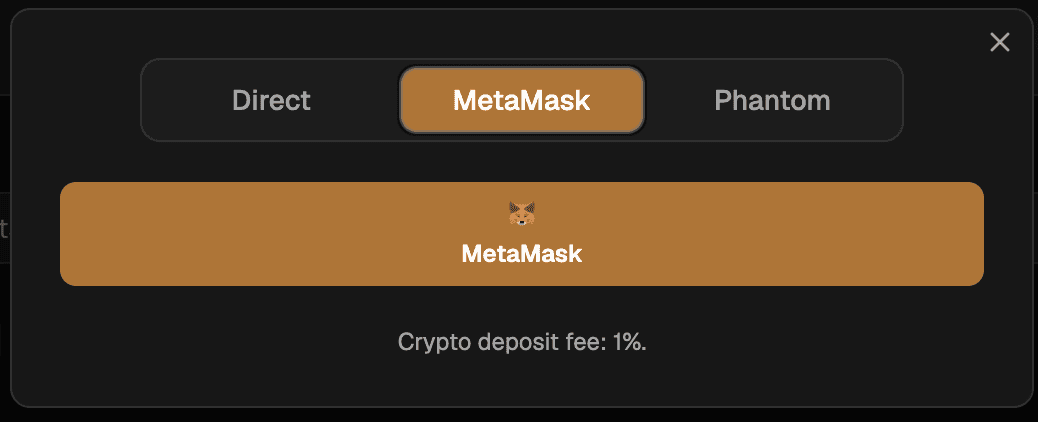
Funding runs on crypto rails: deposit USDC on Polygon either to a direct address or through a MetaMask or Phantom wallet, with a $3 minimum and a 1 percent crypto deposit fee. There is no card or bank option, so if you have never used a wallet, budget a few extra minutes for the first deposit. After that, top-ups take under a minute.
Once you are funded, spend a few minutes with the charts and order book before you trade, since the price you take matters as much as the side you pick. Start small to get a feel for how the market moves, then lean on limit and stop-loss orders as you get comfortable. If you build models or run automated strategies, ESX offers API access for algorithmic trading and backtesting.



Why Sign Up for ESX in 2026?
ESX is built for bettors who already think in prices. If you care about the number you get, want to read a live order book before you commit, and would rather set your own exit than accept a cash-out offer, ESX gives you tools a standard sportsbook does not. No house shades the line against you, and makers pay nothing, so a patient trader who posts limit orders can work a full NFL Sunday without a trading fee on the orders that fill. If you want a parlay builder, a deposit match, and same-game boosts, this is not that product, and the cons below say so plainly.
The terminal is what keeps you there. Candlestick charts, volume, sports-built indicators like Scoring Momentum and Buying Pressure, and stop-loss and take-profit orders let you manage a sports position instead of waiting on it, and original micro-markets from Heads-Up to leverage let you express views a moneyline cannot. The counterweight is scale. The exchange is still small, and the company has been raising capital to pay market makers and deepen the book, so football season is the test of how much size each market can hold. If you are in the US, or want the peer-to-peer model without the terminal, our Novig review covers an easier on-ramp to the same idea.
Replay Mode Lets You Practice on Finished Games
Replay gives you a reason to create an account before you ever deposit. Pick a completed game and ESX replays the market candle by candle like a stock chart, with indicators on screen and a paper bankroll to trade. A Blind toggle hides the game context so you are reading price action alone. I ran a handful of replays before putting real money into a live market, and they taught me more about how these prices swing on a scoring drive than a first funded position would have. Since Replay needs no deposit, it is also the cleanest way to test the terminal before you sort out USDC funding. A leaderboard, tournaments, quests, a daily streak, and referral bonuses round it out with light rewards between games.

ESX Review: Pros and Cons in 2026
ESX brings real trading infrastructure to sports. It is also a young exchange that is still building depth and adding features. Here is where it stands five weeks into the NFL season, the stretch the company itself set as its volume test.
Pros of ESX
Real trading terminal: Candlestick charts, order books, volume, and sports-built indicators such as Scoring Momentum, Pace Index, and Buying Pressure that read both the game and the market.
Brokerage-style order types: Limit, stop-loss, and take-profit orders let you manage a position instead of watching every play.
Exit at a market price: Sell into the order book for whatever the market is paying rather than accepting a sportsbook's cash-out number.
Fees below standard juice: Takers pay 2 percent scaled by price, which puts breakeven on a 50 cent fill near 50.5 percent against 52.4 percent on a -110 bet. Posting limit orders as a maker removes the fee entirely.
Automation and micro-markets: API access for algorithmic trading and backtesting, plus original markets like Heads-Up, Milestone, Rankings, and leverage.
Replay mode: Practice-trade finished games candle by candle with a paper bankroll before risking a dollar.
Cons of ESX
US access is not open: ESX has traded offshore on crypto rails and is closed to US users while it pays for legal work toward a US app. Check eligibility before anything else.
Liquidity is thin: As of mid-2026, the company reported roughly 1,000 signups and 100 to 200 people trading in a month, with a $1 million monthly volume target for the NFL season. On quiet contracts a two or three cent spread costs more than the fee, so keep your size small and lean on limit orders.
Regulatory status developing: ESX is not a CFTC-designated exchange. The CFTC now has two open proposals on event contracts, June's rules on which sports markets qualify and an October 2026 proposal to define them as swaps, so the ground under this category is still moving.
No sign-up bonus: There is no deposit match or welcome offer, so the case for ESX rests on pricing and tools.
Crypto-only funding: Deposits run on USDC over Polygon with a $3 minimum and a 1 percent deposit fee. There is no card or bank option.
Learning curve: The terminal's depth rewards traders and can feel heavy for casual bettors at first.
Access and liquidity decide whether you can use ESX today, and football season will show how much liquidity arrives. Funding options, a welcome offer, and onboarding are gaps a growing exchange can close on its own timeline. Regulation is the one con outside the company's control.
Recommended Betting Tools for ESX: Sharpen Your Edge in 2026
Trading on a prediction market rewards good pricing and a clear read on value, which is where the right tools help. OddsJam surfaces fair value and how a number compares across the wider market, Prop Professor digs into player prop data and hit rates, and Outlier keeps your line reads sharp with EV and projections. Each one sharpens the prices you decide to trade on ESX. You can find more options in our roundup of the best sports betting tools.
Feature
ESX
FanDuel
Type
Prediction Market
Sportsbook
Sports
NFL, NBA, MLB and more
NFL, NBA, MLB, NHL and more
Bonus
No signup bonus yet
Bet $5 Get $200 In Bonus Bets
Regulation
Not yet CFTC-certified
State-regulated



The Bottom Line on ESX
ESX sits between a casual bet slip and a professional trading desk. It gives price-sensitive bettors charts, order books, and brokerage-style order types, so they can trade a game the way they would trade a stock. The cost structure rewards patience: makers pay nothing, takers pay less than standard sportsbook juice, and the spread is the number that actually moves your breakeven. It suits active traders who care more about execution than promos, and Replay gives newcomers a free way in. It does not suit anyone who mainly wants a welcome bonus and a parlay builder.
Two questions decide it before you fund an account: can you trade from where you are, and is the book deep enough for the size you want? Both answers are still moving. Access hinges on the company's US legal work, and depth gets tested every NFL weekend as the exchange chases its volume target. If both answers are yes, ESX is one of the more interesting sports prediction markets to learn right now, and learning the order book at small size costs less than learning it later with more on the line.
If you would rather trade a game than simply bet it, ESX earns a look. You get zero maker fees, taker costs below standard juice, and an exit at a real market price, which a cash-out button cannot match. Confirm you can trade from where you are, open an ESX account, and run a few free Replay sessions on finished games before you deposit. When you do fund, start with one small position this NFL Sunday and post a limit order instead of taking the ask. That one habit removes the fee and most of the spread.