The Evolution of Real-Time Betting at the Highest Level
In the world of professional sports betting, the edge has shifted from instinct and spreadsheets to speed, data, and intelligent automation. Today’s elite bettors don’t just analyze markets, they move with them. By combining AI-powered modeling, real-time line movement monitoring, and automated execution, professionals can stay ahead of the odds.
What Are Live Odds Screens & Why Pros Rely on Them
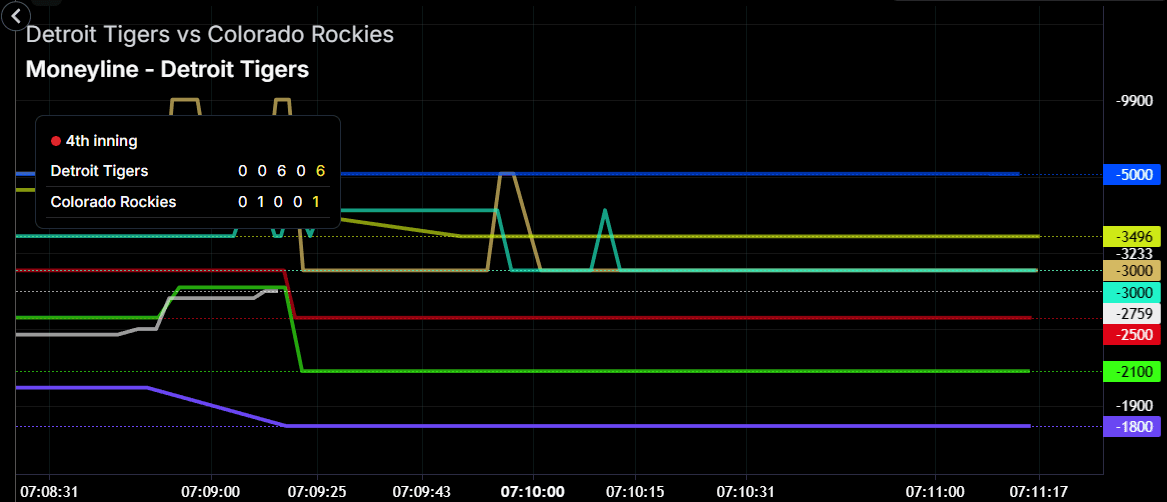
Real time odds comparison tools are foundational to the professional bettor’s arsenal. These tools aggregate real-time odds from dozens of sportsbooks across the globe, updating constantly. At first glance, they’re simple, but in the hands of sharp bettors, they’re powerful market indicators.
Live Odds Screens Help You
With live odds changing rapidly, there are numerous opportunities to pick up value. Sportsbooks employ various methods to set their lines, and there are often discrepancies to exploit, whether through arbitrage, hedging, or taking more action at better prices.
Spot steam moves, which are rapid line shifts triggered by sharp money.
Identify stale lines, where one sportsbook lags behind the rest.
Compare limit increases and movement to confirm sharp activity.
Professionals don’t just look at the odds, they study how they move, when they move, and which books are leading. A move at Pinnacle or Circa tells a very different story than one at a square book. This real-time context helps experts interpret where sharp action is flowing, and when to get in.
Example: You see the Packers spread move from -3 to -3.5 at Pinnacle, but a recreational book still shows -3. That stale line is a potential edge, and a live odds screen surfaces it in seconds.
Related Reading
1
Live Odds Comparison: Finding the Best Lines in Real Time
2
Live Odds Explained: How In-Play Betting Odds Work
AI-Driven Modeling: Using Machine Learning for Betting Projections
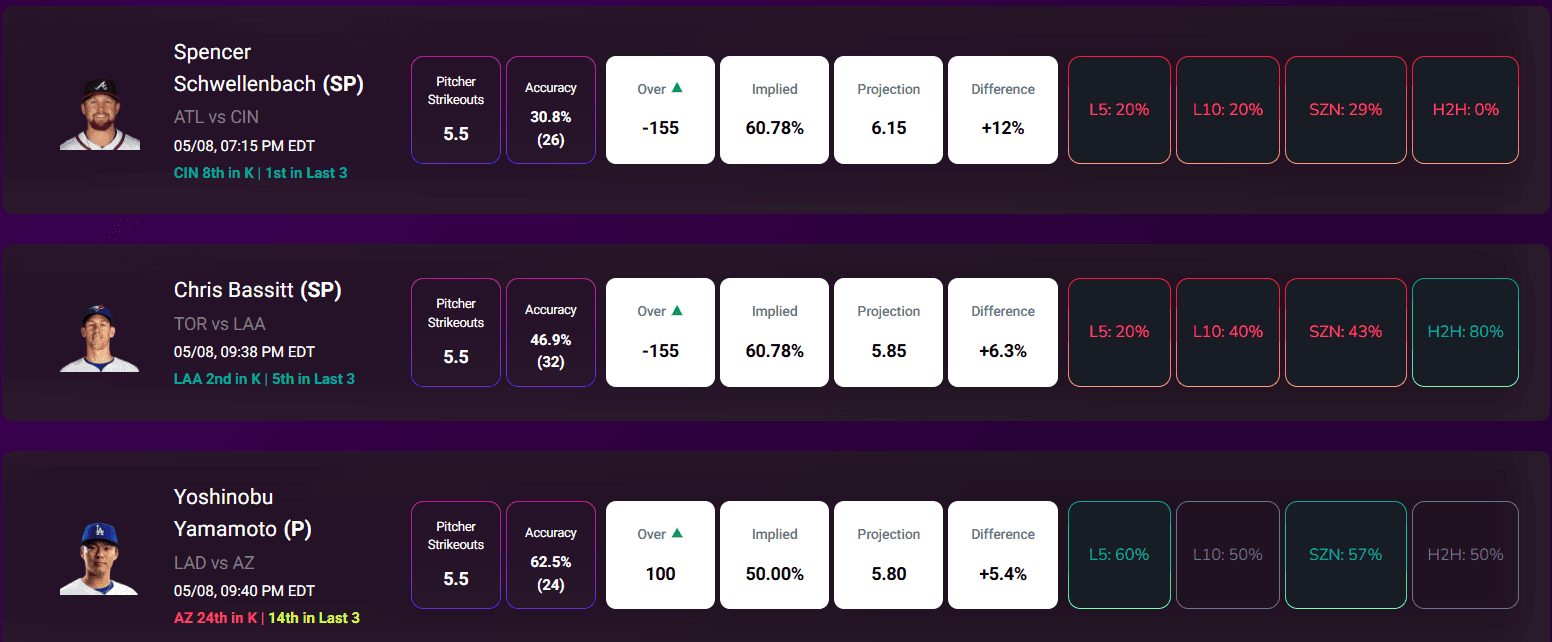
AI and machine learning are redefining what it means to build a betting model. Traditional models use fixed rules and historical trends, but AI models learn and evolve. It's essential to be patient with these models and recognize that they need constant maintenance.
How Machine Learning Enhances Projections
Just like machine learning enhances many industries, it can also help sharp bettors make better projections.
Incorporates real-time variables (injuries, weather, breaking news) automatically.
Learns from prediction accuracy over time and adjusts weightings accordingly.
Detects subtle correlations across markets that static models often miss.
Professional betting groups now deploy neural networks and regression trees that refresh their projections every 15 to 30 minutes. These models forecast outcomes and calculate expected value relative to current market odds.
For example, an AI model might update player prop projections based on sharp steam from a major sportsbook, then flag discrepancies at slower-moving books in real time.
Example: An ML model trained on 5 years of NBA data might learn that back-to-back road games for teams with a bottom-10 pace rating predict a 2.5-point underperformance relative to the spread, a pattern no static model would catch.
Related Reading
1
AI Betting: How AI Sports Betting Tools Actually Work
2
AI Sports Betting Picks: Do They Work in 2026?
Scraping Data & Integrating It Into Your Models
To fuel real-time projections, professionals build systems that scrape data 24/7. Whether it be advanced stats, current odds, weather, or even lineup projections, automating ways to receive data to feed to your model is essential.
What the Scraping Process Involves
There are tools to help scrape data. It's also important to note that some companies protect their data and make it difficult to scrape.
Collecting odds: Using APIs or tools like BeautifulSoup/Selenium to extract lines from multiple books.
Storing & timestamping: Creating a historical record of how each market moves over time.
Integrating data into models: Odds and line movement become variables within the projection model.
Scraping isn’t just about speed. You need to know what you are scraping and how it fits into the bigger picture. It’s about having structured, timestamped data that feeds into your predictive framework. Line movement becomes a signal, not noise.
Example: A Python script using BeautifulSoup scrapes closing lines from three sharp books every night at 6:55 PM, five minutes before tip. That timestamped data feeds into a CLV tracker that measures your bet quality over thousands of wagers.
Related Reading
1
Player Prop Projections: Using Data for Projecting Lines
2
Mathematics of Sports Betting: Formulas That Win
Automation & Execution: Placing Bets Without Lifting a Finger
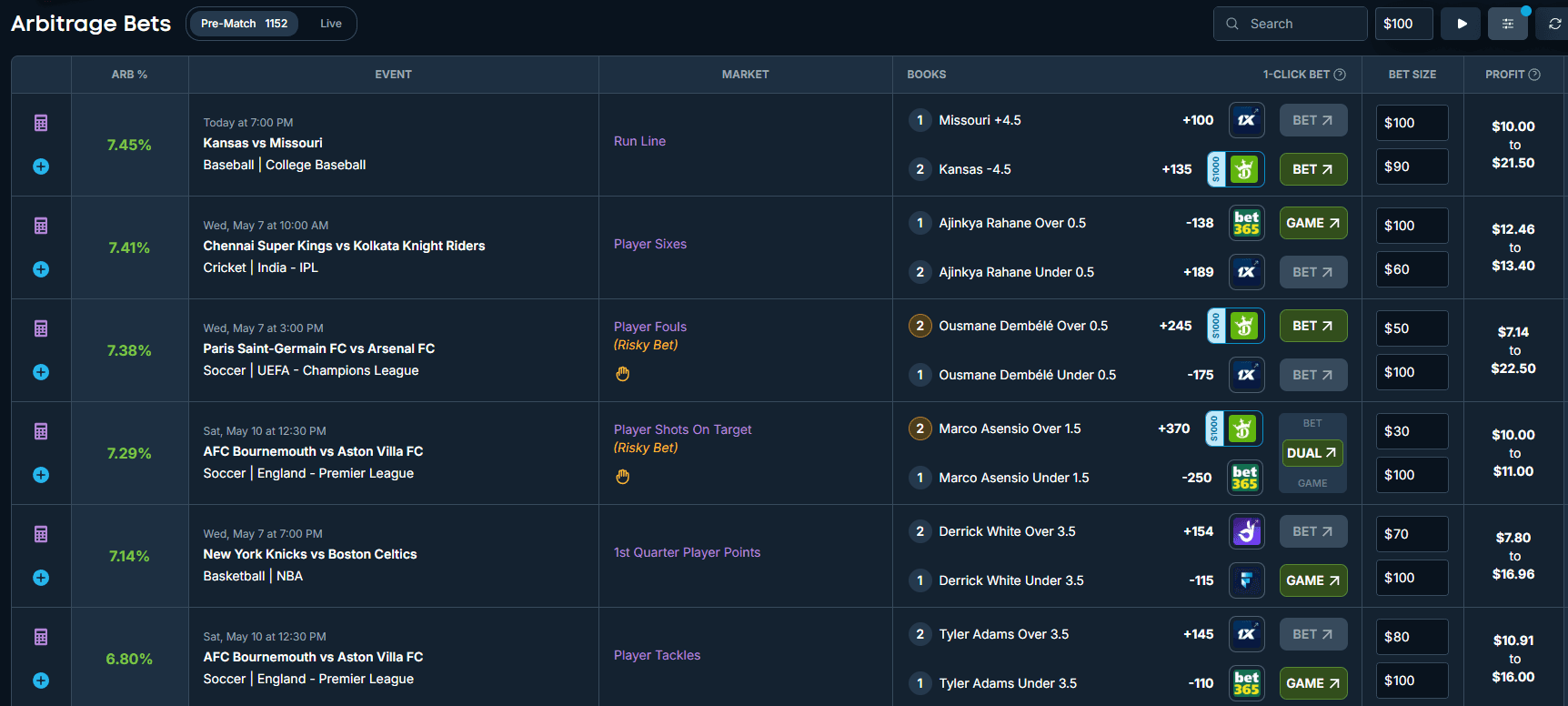
At the expert level, the time between identifying an edge and executing a bet can make the difference between a win and a stale line. That’s where automation comes in. It's hard to automate wagers across legal sportsbooks, but for professionals with PPH accounts, it's possible to make wagers automatically when specific lines appear.
How Pros Automate Betting Execution
Creating an automated bet placer is difficult; we cannot outline that process for you. However, here's some food for thought if you are looking to get started in AI sports betting with automated bots.
Model flags an edge (e.g., +5% EV based on updated projection).
Software triggers bet placement instantly through sportsbook APIs or auto-click bots.
Limits are respected: each account has rules for stake sizing, frequency, and exposure.
Example: Your model flags a +4.2% EV play on a player prop at a PPH account. An automated bot places a $500 bet within 8 seconds of the alert. By the time you would have opened the app manually, the line has already moved.
Related Reading
1
Positive EV Betting Tool: How to Find +EV Bets Automatically
2
Betting Management Software: Top Tools for 2026