Why Expert Bankroll Management Matters
Advanced bankroll management isn’t just about betting units, it’s a cornerstone of long-term professional betting success. Earlier in this course series, we covered bankroll fundamentals and the unit system. This article builds on that foundation with the staking methods and account strategies that professionals actually use.
Advanced Staking Methods: Kelly Criterion & Fractional Kelly
As a sports bettor looking to take things more seriously, eventually you need to graduate from the unit system. To do so, you need to understand the Kelly Criterion and how it affects bet staking based on your edge.
Kelly Criterion
The Kelly Criterion is a mathematical formula used to calculate the optimal stake size based on your perceived edge and odds offered by the sportsbook.
Formula: (BP - Q) / B
B: Decimal odds minus one
P: Probability of winning
Q: Probability of losing (1-P)
Pros & Cons:
Maximizes long-term bankroll growth
High volatility and risk of significant losses in short-term
Fractional Kelly
Fractional Kelly involves betting a fraction of the full Kelly recommendation (such as half or quarter Kelly).
Reduces volatility and potential losses
Balances growth and risk effectively
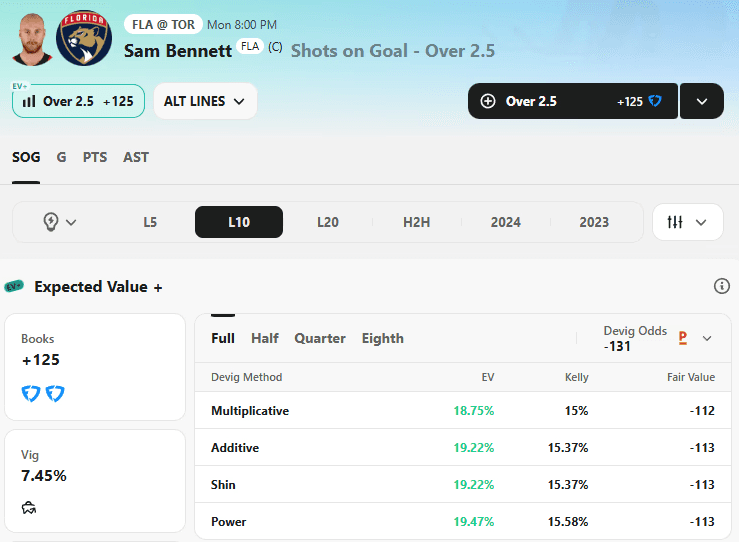
Check out our Outlier reviewand our OddsJam review. These tools help you stake your wagers based on the Kelly Criterion.
"
Example: If the full Kelly recommends betting 10% of your bankroll, fractional Kelly (half-Kelly) advises betting just 5%.
Related Reading
1
Kelly Criterion Sports Betting: Optimal Bet Sizing
2
Mathematics of Sports Betting: Formulas That Win
Proportional Staking Methods
Proportional staking adjusts your bet size in direct proportion to your current bankroll. Instead of betting a fixed dollar amount on every wager, you bet a fixed percentage. This means your bets grow when you are winning and shrink when you are losing, which naturally protects your bankroll during downswings and compounds growth during winning runs.
Flat Staking vs. Proportional Staking
Flat staking means betting the same dollar amount on every bet regardless of bankroll changes. If you start with a $10,000 bankroll and bet $200 per game, you continue betting $200 even if your bankroll drops to $7,000. Proportional staking ties every bet to a percentage of your current bankroll. If you bet 2% and your bankroll is $10,000, your bet is $200. If your bankroll drops to $7,000, your bet becomes $140. This adjustment happens naturally and keeps your risk consistent relative to what you have.
How Proportional Staking Works in Practice
Most professionals use a staking percentage between 1% and 3% of their current bankroll per bet. The exact percentage depends on your edge size, your risk tolerance, and how many bets you place per day. A bettor placing 10 bets per day with small edges might use 1%, while someone placing 2 to 3 high-confidence plays might use 2 to 3%.
Key Benefits:
Protects against losing streaks by automatically reducing bet sizes as your bankroll shrinks
Compounds gains during winning streaks by increasing bet sizes as your bankroll grows
Removes emotion from bet sizing decisions since the math dictates the amount
When to Recalibrate
Recalibrate your percentage when your edge changes, not when your bankroll fluctuates. If you start finding more consistent edges through a new model or data source, you might move from 1.5% to 2%. If a market you specialize in becomes more efficient and your edge narrows, drop back down. The percentage itself should change slowly and deliberately, while the dollar amount adjusts automatically with every bet.
Example: If you win 55% of your bets at-110 odds, you're profitable in the long run, while winning 60% of your bets at -150 odds might result in a net loss. It's about finding value in the odds, not just winning individual bets.
Related Reading
1
Bankroll Management in Sports Betting: How to Manage Your Money
2
How to Make Money in Sports Betting: What Works
Professional Account Management & Syndicate Betting
For pro bettors, there comes a point where the betting is the easy part. The hard part becomes finding ways to get money down on games. Sportsbooks often limit winning sports bettors, and it's hard to circumvent these limits. When you have a real edge, you must get creative about getting down.
Managing Multiple Accounts
Professional bettors often manage multiple sportsbook accounts to:
Find the best odds
Avoid betting limits
Spread risk effectively
These accounts come in many different shapes and sizes, and my not always be the most trustworthy avenues. It is not recommended to use offshore sportsbooks, but true pro sports bettors have to do what they have to do to profit.
Syndicate Betting
Betting syndicates pool resources to place larger bets, sharing risks and profits among members. This team is used loosely, and there are a few applications. The core thing to note here is that syndicates are groups of professional bettors who attack edges together.
Key Points:
Clear rules on bet sizing and stake distribution
Strategies to maximize group efficiency and profitability
Challenges like ensuring trust and fair distribution of profits
Risk Management for High-Stakes Betting
High-stakes betting requires a disciplined approach to risk that goes beyond knowing your edge. Any professional sports bettor is hyper-aware of the exact size of their bet and at what price it is made. When your bankroll is large enough that individual bets represent real money, the consequences of poor risk management multiply quickly.
Setting Maximum Exposure Limits
Professional bettors set hard caps on how much of their bankroll can be exposed to any single event, sport, or correlated set of outcomes. A common rule is never having more than 5% of your total bankroll riding on a single game, including all correlated bets on that event. If you have a spread bet and a player prop on the same game, both count toward your exposure limit for that event.
Diversification Across Sports and Markets
Spreading action across multiple sports reduces the risk that one bad day wipes out your week. If your NFL model has a rough Sunday, gains from NBA or NHL action can offset those losses. Diversification also protects you from market-specific shocks like rule changes, data source disruptions, or sudden efficiency improvements by sportsbooks in a particular sport.
Using Live Betting as a Risk Tool
Live betting is not just an opportunity to find new edges. It is also a way to manage existing positions. If you took a pregame side and new information comes in, whether a key player injury or a game pace wildly different than expected, you can hedge or reduce your position through a live bet. This is about adjusting to new information the same way a trader adjusts positions when market conditions shift.
Recognizing Correlated Risk
One of the most common mistakes at the high-stakes level is not recognizing correlated risk. Betting the under on a game total, the under on a player's passing yards, and the under on another player's receiving yards in the same game feels like three separate bets, but they are heavily correlated. If the game turns into a shootout, all three lose. Professionals track correlation across their open positions and make sure they are not accidentally overexposed to a single outcome.
Example: If you have a $50,000 bankroll, capping futures exposure at 10% means no more than $5,000 tied up in long-term bets, leaving $45,000 liquid for daily action where edges appear and disappear quickly.
Related Reading
1
Hedge Bets Explained: When and How to Hedge Your Wagers
2
Betting Strategies: Proven Approaches to Sports Wagering