Sports Betting Models
Quantifying edges is necessary for leveling up as a sports bettor. Building a betting model can be the difference between consistent profits and losses. Building and refining a predictive model based on data allows bettors to gain an edge by making smarter, data-driven decisions.
This article will introduce the basics of betting models, explain how to use publicly available data to create your own lines, and highlight the importance of adjusting your models as new information comes in. Additionally, we’ll show you how to use tools like Excel, Python, and third-party software to help you automate your data collection and model-building process.
What is a Betting Model?
A betting model is a statistical tool used to predict the outcomes of sporting events. It uses historical data, team stats, player performance, and other factors to generate predictions. A betting model allows you to compare the implied probability from odds with the true probability based on your own analysis. This helps you identify value bets and improve your betting decisions. Betting tools with projections exist for those who are not ready to model.
Why Betting Models Matter:
Data-Driven Decisions: Instead of betting based on gut feelings or popular opinions, a betting model uses objective data to inform your choices. This leads to more accurate predictions and higher profitability in the long run.
Quantifying the Unknowns: While sports betting will always have an element of randomness, a good model can reduce the impact of variance by providing more accurate predictions and a clearer view of the probabilities.
A Simple Power Rating Model:
One of the simplest models to build is a power rating system. Here is how it works at a high level. You assign each team a numerical rating based on performance metrics. For an NFL model, you might track offensive yards per play, defensive yards per play allowed, turnover differential, and red zone efficiency. Each metric gets a weight based on how predictive it is. Your model then generates a predicted point spread by subtracting the away team's rating from the home team's rating and adding a home-field advantage factor (typically around 2.5-3 points in the NFL). If your model says the Chiefs should be -4.5 and the sportsbook has them at -3, that is a potential value bet on the Chiefs. The columns in your spreadsheet would look something like: Team | Off YPP | Def YPP | TO Diff | RZ% | Power Rating. From there, you compare your predicted spread to the market spread and look for discrepancies of 1.5 points or more.
Example: A betting model for football might use team stats such as passing efficiency, turnover differential, and defensive performance to predict the point spread.
Related Reading
1
AI Betting: How AI Sports Betting Tools Actually Work
2
Mathematics of Sports Betting: Formulas That Win
3
How to Use Publicly Available Data to Create Your Own Lines
Publicly available data is the backbone for sports bettors, allowing you to build your own betting lines. Sportsbooks rely on data just like you, so using that data allows you to spot inefficiencies and bet on mispriced lines. Key data sources include advanced team stats, player performance, and external factors like weather or injuries.
How to Use Public Data:
Historical Data: Collect data from public sources like ESPN, Basketball Reference, and NFL Stats to track team and player performance over time. This data will form the basis of your model.
Statistical Models: Use your gathered data to build models that predict outcomes based on variables like offensive efficiency, defensive strength, and team matchups.
External Factors: Don’t forget to factor in injuries, weather, and team schedules. These often affect a team's performance but can be overlooked by sportsbooks if spotted early enough.
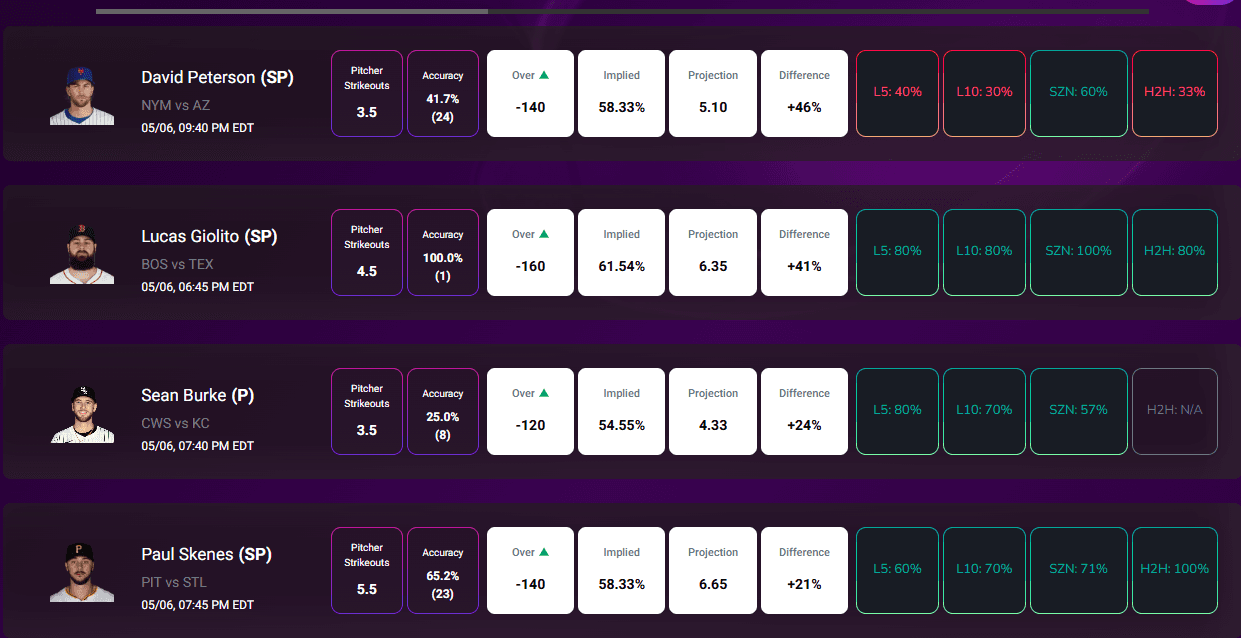
Example: Using data from Baseball Reference, you can track a pitcher’s advanced metrics to build a model to predict how he’ll perform against a particular team. This is the basis of modeling.
Related Reading
1
Player Prop Projections: Using Data for Projecting Lines
2
Betting Management Software: Top Tools for 2026
3
The Importance of Priors & Adjusting Models Over Time
In betting models, priors refer to initial assumptions or historical data that provide the starting point for predictions. As new information (such as injuries or team changes) becomes available, it’s essential to adjust your model to reflect the updated data. Failing to update your priors could lead to inaccurate predictions and missed opportunities.
Why Priors Matter:
Initial Assumptions: Priors serve as the baseline for your predictions. For example, you may assume that Team A has a 70% chance of winning based on their historical performance.
Updating Priors: As the season progresses and new data comes in, you can adjust your priors to reflect changes in team performance or external factors (e.g., injuries, trades, weather).
Example: You may start the season with the assumption that Team A is a strong contender based on last year’s performance. However, if they suffer key injuries or change their coaching staff, you’ll need to adjust your priors to reflect these changes, ensuring that your model remains accurate.
Related Reading
1
How to Get Good at Sports Betting: Skills That Matter
2
Closing Lines: How CLV Separates Sharp From Square
3
Using Excel, Python, & Third-Party Tools for Predictive Betting
Building a betting model doesn’t require complex software or vast programming knowledge, but tools like Excel, Python, and third-party software can help you take your model to the next level. These tools can automate data collection, build statistical models, and track betting performance.
Using Excel for Betting Models:
Excel is a great starting point for organizing data, building basic models, and performing simple statistical analysis. You can use pivot tables, graphs, and built-in functions to track your betting performance and make data-driven predictions.
Using Python for Sports Betting:
Python offers advanced capabilities for data analysis. You can create complex models, run simulations, and perform in-depth analysis using libraries like Pandas and NumPy. Python is great for bettors looking to take their models to the next level.
Third-Party Tools:
Tools like RotoGrinders, Betfair, and SportsRadar provide real-time data and odds comparisons. These tools can help you track line movements and refine your betting strategy.
Getting Started in Excel (A Practical Example):
Open a spreadsheet and create these columns: Team, Wins, Losses, Points For, Points Against, Offensive Efficiency, Defensive Efficiency, Power Rating. Pull team stats from a free source like Pro Football Reference or Basketball Reference. For offensive efficiency, divide total points by total possessions (or use yards per play for football). Do the same for defensive efficiency. Your power rating can start as simple as: (Offensive Efficiency - League Average) + (League Average - Defensive Efficiency). Once you have ratings for every team, you can predict any matchup by taking Home Rating minus Away Rating plus a home-field advantage constant. Compare your predicted spread to the sportsbook spread. If the difference is greater than 1.5 points, flag it as a potential bet. This is a basic framework you can iterate on as you learn what variables matter.
Example: You can use Python to pull team stats, calculate expected values, and run simulations to predict the point spread for NBA games. Tools like Excel can help you organize the data and perform basic calculations on player performance.
Related Reading
1
Positive EV Betting Tool: How to Find +EV Bets Automatically
2
Prop Finder Tools: Find Better Player Prop Bets in 2026
3
Related Reading
1
2
3
1
Models Turn Intuition Into Process
A betting model replaces gut feelings with data-driven predictions. Even a simple power rating system in a spreadsheet can identify value by comparing your projected spread to the market line. Publicly available data from sites like Basketball Reference and Pro Football Reference gives you the raw material. Adjusting your model as new information comes in, whether injuries, trades, or mid-season performance shifts, keeps your predictions accurate. You do not need to be a programmer to build a useful model, but tools like Python can take things further. The goal is quantifying your edge so every bet has a clear rationale behind it. In the final article of this course, we cover top-down vs. bottom-up betting and how professionals decide which approach fits their style.
2
3