What Is Sharp Betting? Sharp Money, Sharp Action, and Sharp vs Square
What makes a bettor sharp, how sportsbooks react to sharp money, how to spot it in the market, and the habits that make your own bets sharper.
By
Eric Pauly
9 min read
What Is Sharp Betting?
Sharp betting is betting with a measurable, repeatable edge: taking prices that are better than the true odds and beating the closing line over time. A sharp bettor, or "sharp," is someone sportsbooks respect because their bets predict where the line is going. The opposite is a square, a recreational bettor who bets on feel, favorite teams, or popular sides at whatever price is posted.
You do not have to be a professional to bet sharper. Most of what separates sharps from squares is process: shopping prices, knowing the fair number, and tracking results honestly. This guide covers what sharp money and sharp action are, how books respond to them, how to spot them in the market, and the habits that move your own betting toward the sharp side.
article Summary
Sharp betting means taking prices better than the true odds and beating the closing line over time. Sharp money is betting from respected players that moves lines, often visible as reverse line movement or steam. Chasing those moves late rarely pays, but line shopping, devigging, and tracking closing line value make any bettor sharper.
Sharp vs Square: The Real Difference
The difference is less about who you are and more about how you bet.
Price over team. A sharp asks whether the price is good. A square asks who wins.
Closing line value. Sharps consistently get better numbers than the closing price. Squares tend to bet late, after the price has already moved against them.
Staking. Sharps bet consistent units sized to their edge. Squares size by confidence and chase losses.
Shopping. Sharps hold accounts at several books and bet wherever the number is better. Squares bet wherever the app is already open.
Specialization. Sharps often focus on a few markets they price well. Squares bet the whole board.
Sharp Is About the Price, Not the Side
There is no permanent sharp side of a game. Sharps might bet one team at one number and the other team at a different number, because what they are buying is the price. That is why "the sharps are on the Chiefs" is only useful information if you also know the number they bet.
Why Sportsbooks Take Sharps Seriously
Market making books such as Pinnacle and Circa take large bets from sharp players on purpose and use that action to sharpen their lines. Retail books tend to do the opposite and cut limits on accounts that beat the close. Either way, a sharp bettor's action carries information the book cannot ignore.
Example
Example
A sharp likes the Chiefs at -6.5 because their number is -7.5. When the line moves to -8.5, the same sharp might take the Broncos +8.5, because now the underdog is the better price. Neither side is "the sharp side" on its own. The price decides it.
What Is Sharp Money?
Sharp money is wagers from respected bettors and betting groups whose action moves lines. Sharp action is the betting activity itself, the moment those bets hit the market. When sharp money comes in, books respond in a few predictable ways.
They move the number. Market makers adjust quickly, and other books copy them.
They cut limits. Retail books often limit accounts that consistently beat the closing line.
They respect it more than volume. A few large sharp bets can move a line more than thousands of small public bets on the other side.
That limiting is one reason sharp bettors spread action across many books and look beyond traditional sportsbooks. On a CFTC certified prediction market like Novig, you trade peer to peer and prices come from other traders, so winning accounts are not limited the way they are at retail books.
Sharp Money vs Public Money
Public money is the volume of recreational bets, which leans toward favorites, overs, and popular teams. The useful comparison is between the share of tickets and the share of money: when 75% of tickets are on one side but only 45% of the money is, the larger bets are on the other side. Our guide to public money in betting covers how to read those splits and where they mislead.
How to Spot Sharp Money in the Market
Reverse Line Movement
Reverse line movement is when the line moves against the side most bets are on. If most tickets are on one team and the line moves toward the other, the money on the other side is either larger or more respected. Our reverse line movement guide walks through how to read it without overreacting.
Steam Moves
A steam move is a fast, coordinated move across many books within a minute or two, usually after a sharp group hits several books at once. Once you see steam, most of the value is already gone at the books that moved. See our breakdown of steam moves for how they unfold.
Market Makers Move First
When Pinnacle or Circa moves and retail books follow minutes later, the first move was most likely sharp. Watching which book moves first tells you more than the size of the move.
Moves Late at Full Limits Mean More
An overnight opener moves on small limits, so early moves carry less weight. A move close to game time, when limits are highest, means real money disagreed with the price.
Tracking this by hand is slow. OddsHub runs a drop terminal that flags sharp odds moves and tracks Pinnacle limits, and you get 20% off through BetSmart; our OddsHub review covers the plans. Unabated builds its own market based fair line from sharp books, which makes it easy to see when a soft book is out of step. More on reading moves in our line movement guide.
Should You Follow Sharp Money?
Following sharp money sounds like a shortcut, but by the time a move is visible, the price that made it a good bet is usually gone. Betting the Bills at -2.5 after sharps took them at -3 means paying a worse price for the same opinion, and that half point is often the entire edge.
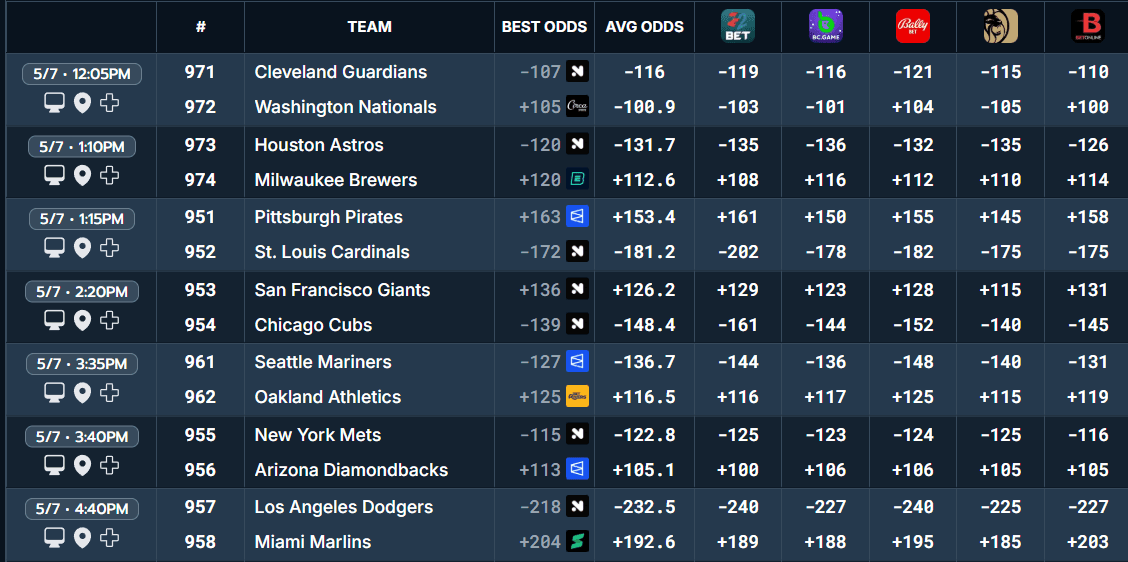
The useful version of following sharp money is finding the books that have not moved yet. When I see a move on an odds screen, the only question that matters is whether any book is still hanging the old number. That is exactly what +EV betting tools automate: they treat the sharp price as the fair line and flag the books that lag behind it.
The other version is to stop chasing and start being early: form your own number, bet it before the market moves, and let the closing line tell you whether you were right.
How to Bet Sharper Starting Today
Shop every bet. Hold accounts at several books and use an odds comparison tool to find the better number.
Know the fair price. Remove the vig from a sharp book's line with our no-vig calculator before you bet.
Track closing line value. Our closing line value guide shows how. Beating the close is a reliable sign you are betting sharp prices.
Bet consistent units. Size by edge, not confidence. Our guide to betting units covers the setup.
Specialize. Pick a few markets you can price well instead of betting the whole board.
None of that requires a professional bankroll. It requires treating every bet as a price decision, which is what sharp betting has always been.
Final Thoughts
Sharp betting is not a label you earn, it is a set of habits. Sharps buy prices, not teams, and the market rewards that by moving toward them. You can spot their money in reverse line movement, steam, and early moves at market makers, but chasing those moves late usually means paying the worse price.
The sharper path is to shop every number, know the fair price, and grade yourself on closing line value. Do that consistently and you are betting the way sharps do, whatever your bankroll.
Sharp Sports Betting FAQ

Additional Resources
Explore our curated selection of guides and tools to help promote responsible gambling.

Sharp Sportsbooks vs Soft Sportsbooks: How Sharp Lines Reveal Value
Sharp sportsbooks set the prices retail books copy. Here is how to use those lines to spot soft odds worth betting.

First Basket Scorer Bets: What Counts and How to Price Them
Learn how NBA first basket scorer bets settle, why the full board carries heavy vig, and how to price a player yourself.

What Is an Odds Screen? How to Read Every Row and Column
Learn what an odds screen is, what every row and column means, and how to check whether the top price is actually a good one.

NFL Receiving Yards Props: How to Price Routes, Targets, and Lines
Price NFL receiving yards props from routes, targets per route, and receiver archetype, then shop the line where books disagree.