Best AI Sports Betting Tools, Apps & Platforms for 2026
All AI Tools for Sports Betting
Every tool with AI functionality

Bet2Invest
Build a strategy, backtest it on Pinnacle history.

Final3rd
Soccer stats, AI predictions, and betting data in one place.

RotoBot
AI betting chatbot for casual bettors.

Gambly
One-of-a-kind AI-backed sports betting chat bot.
Pine Sports
A sports betting research tool with an AI chatbot, player prop data, +EV, and arbitrage

Juice Reel
AI sports betting predictions and a smarter way to track, analyze, and learn from every bet you place.

Dimers Platinum
AI-backed college football bets with an immaculate track record.

LineProphet
Multi-faceted sports betting tool with projections, AI, advanced data, and more.
Playerprops.ai
AI-backed player prop and game line research & projections.

Dimers Pro
Projections, betting picks, and predictions across major sports markets.
Rithmm
Create custom AI-backed sports betting models and research bets in minutes.

BetAlytics
Deep learning models and a proprietary rating system for predicting player props and game lines.

SharpStakes
Player prop trends, AI analysis, and parlay building made easy.
Learn More About AI in Sports Betting
Explore our curated selection of guides and tools to help promote responsible gambling.

AI Sports Betting Picks Guide
Understand how AI generates sports betting picks, the promises and limitations of AI models, and how to evaluate AI-driven betting services.
Explore All Features
Player Props

Guides on player prop research, projections, and hit rate data to sharpen your prop betting.
+EV

Tools with positive expected value features
Arbitrage

Discover the top arbitrage betting tools for 2026. Compare odds across sportsbooks, spot sure bets in real time, and learn how to grow your ROI.
AI Tools

Tools that leverage AI
Odds Comparison Tools
Tools that compare odds across multiple sportsbooks to find the best value
Projections
Tools with projections in different markets.
Community

Tools with thriving communities within their app or on Discord
Bet Tracking Apps

Tools with bet tracking
Real-Time Odds
Tools with real-time line movement
How Can AI Tools Help With Sports Betting?
AI sports betting tools have gone from a marketing buzzword to a real part of how a lot of bettors do their research. At their core, these are apps and platforms that use machine learning or large language models to process data, surface patterns, and turn raw numbers into something you can act on. Some generate picks. Some project player stats. Some let you ask a question in plain English and get an answer back in seconds. The label "AI" covers a lot of ground, so the first job is understanding what a given tool actually does before you trust it with your bankroll.
The honest version: AI does not know who wins Sunday's game. What it does well is crunch far more data than you can by hand, weight the variables that matter, and update its outputs as new information comes in. Used with a disciplined strategy, that is a genuine edge. Treated as a crystal ball, it is a fast way to lose money. Below we break down what the technology really means, which tools do it well, and how to separate signal from hype.
What "AI" Actually Means in a Betting Tool
Not every product that puts "AI" on its homepage is doing the same thing. In practice, AI sports betting tools fall into three buckets:
Chat assistants. These are conversational tools built on large language models. You type a question like "find me value player props for tonight's NBA slate" and the tool pulls data and responds. Gambly is the clearest example.
Projection and prediction models. This is statistical machine learning that ingests historical stats, matchups, injuries, and market data to output projected numbers or win probabilities. Pine Sports and RotoBot live here.
Pick generators. These are models that score every game or prop and surface the ones the algorithm rates as value, usually with a confidence rating attached. Rithmm is the go-to example.
Plenty of tools blend two or three of these. The distinction matters because it tells you what you are actually getting. A chat assistant is only as good as the data it can reach and how well it explains its reasoning. A projection model is only as good as its inputs and how it handles injuries and late lineup news. A pick generator is only as trustworthy as its published results. Knowing which type you are using keeps your expectations honest and tells you which questions to ask before you subscribe.
What Features Should You Look For in an AI Betting App?
A good AI sports betting app will not hand you a sure thing, and any tool that promises one is selling something. What the strong ones do is help you make smarter decisions faster. Look for:
Transparent confidence levels that show how strongly the model rates a pick, not just a thumbs up.
Real-time data and odds analysis so projections reflect current lines, injuries, and lineup news.
Explained reasoning that shows why the model likes a bet instead of asking you to trust a black box.
Customizable inputs so you can weight sports, markets, or bet types around your own approach.
Performance tracking so you can see how the model has actually done over a real sample, not a cherry-picked hot streak.
The tools worth paying for pair automation with transparency. If you cannot see how a pick was generated or how the model has performed over time, that is a red flag no matter how slick the interface looks.
Top AI Sports Betting Tools in 2026
The AI betting market has matured fast, and there are solid options for bettors at every level. For discounts on the tools below, check our sports betting tool roundup.
Gambly
Gambly is a conversational AI tool that works like ChatGPT built specifically for betting. Ask it for value bets, prop analysis, or a read on a game, and it returns data-driven answers in seconds. There is no learning curve, which makes it one of the most approachable ways to put AI to work. Read our Gambly review for the full breakdown.
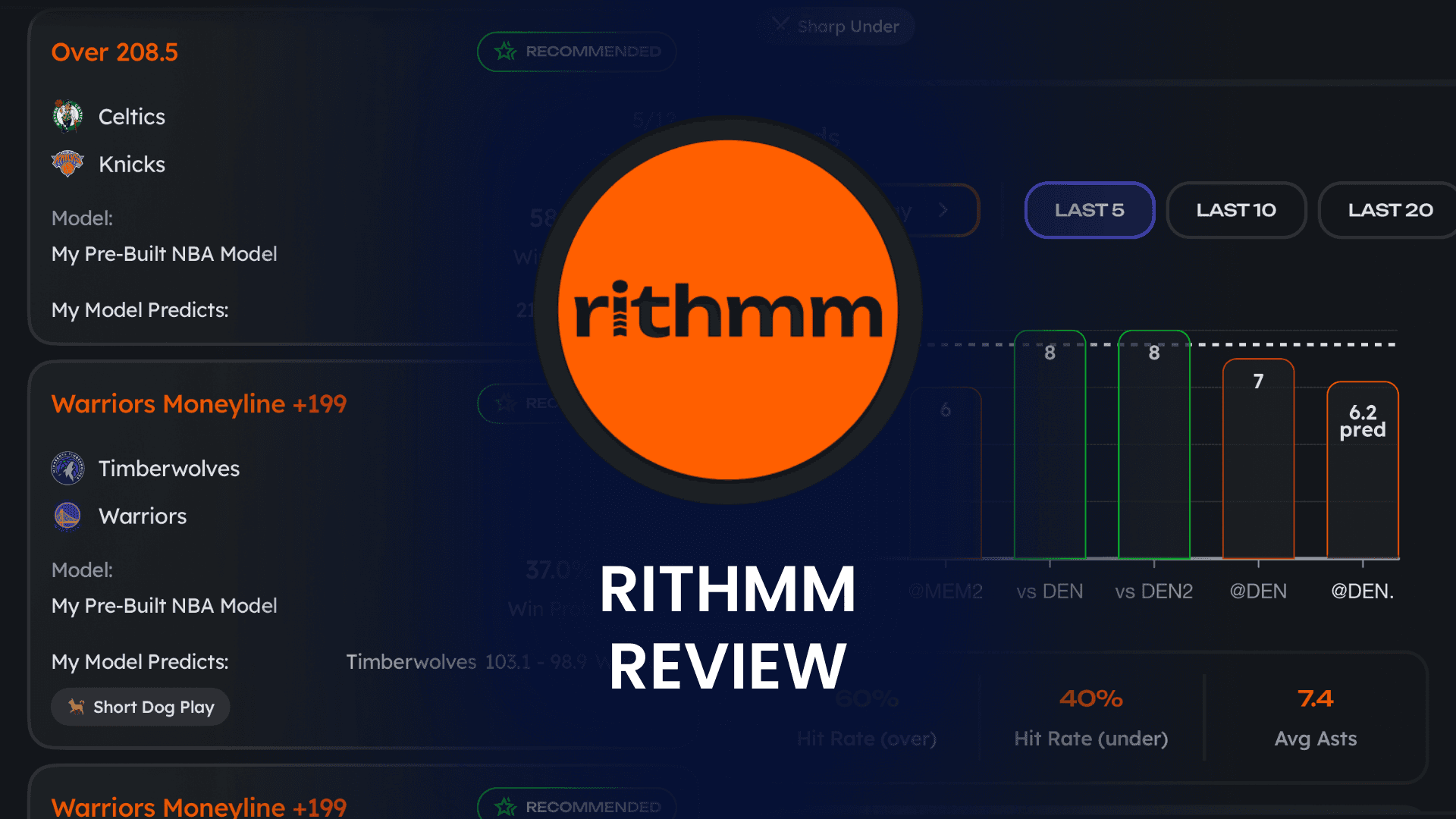
Rithmm
Rithmm uses AI to generate daily picks with transparent confidence ratings across major sports. Its models weigh historical data and current conditions, then surface the plays the algorithm rates as value. For bettors who want clear, actionable output without living inside a dashboard, our Rithmm review digs into how it holds up.
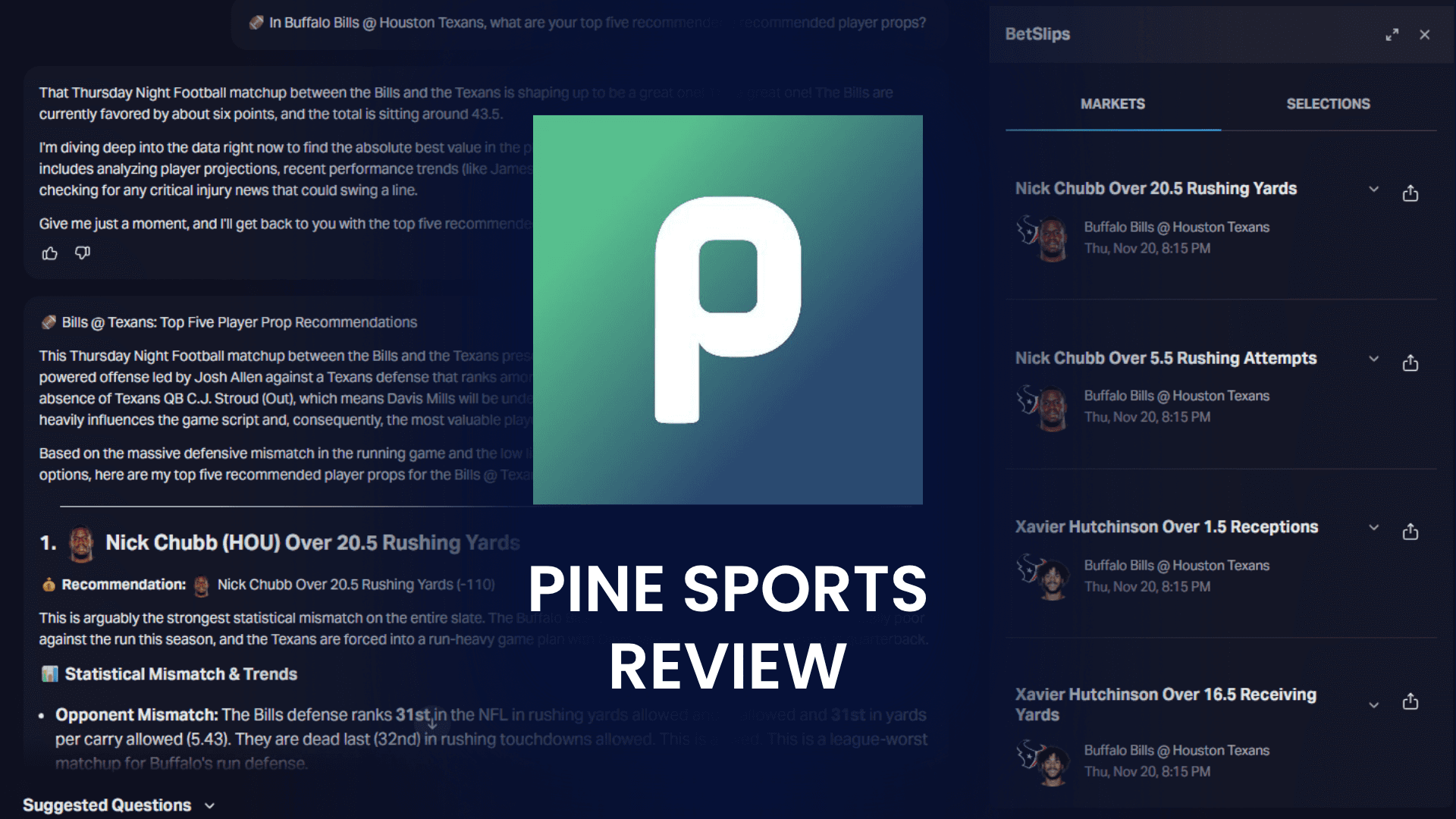
Pine Sports
Pine Sports leans on AI-powered projections across multiple sports, factoring in player data, matchup history, and live market conditions to flag value. The interface is clean and the projections are the draw, which makes it a fit for bettors who want model-driven numbers without clutter. It pairs well with our betting tools with projections.
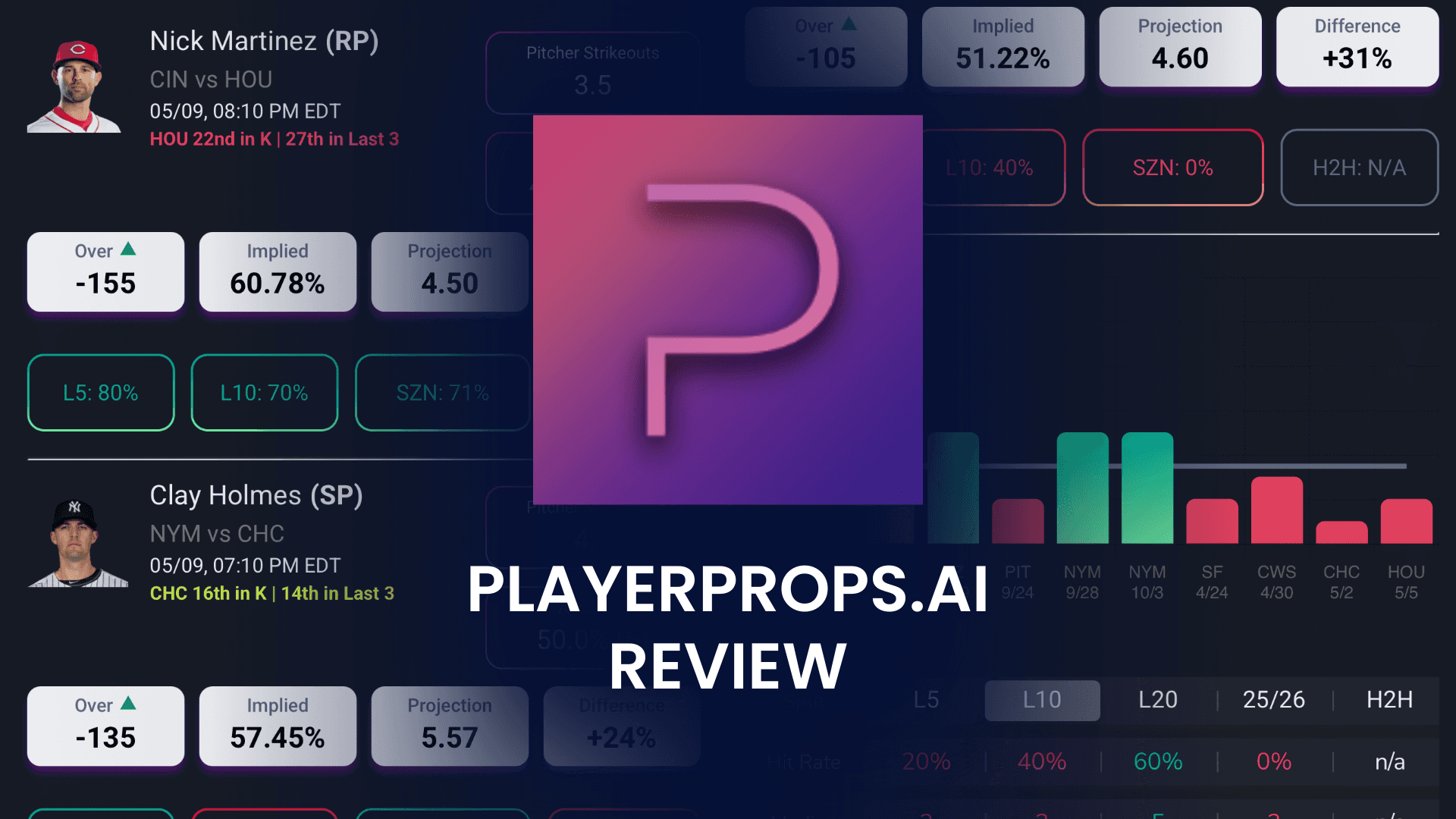
PlayerProps.AI
As the name says, PlayerProps.AI points its machine learning at player prop markets, one of the most data-rich corners of betting. It blends AI projections with historical hit rates to flag props where the number looks off. If props are your focus, our PlayerProps.AI review covers what it does well and where it falls short.
RotoBot
RotoBot brings AI projections and pick generation together, leaning heavily on prop and daily fantasy style analysis. It is a good fit for bettors who want model output across a wide slate of players and games without building their own spreadsheet from scratch.
Hype vs Real Value: Being Honest About AI
AI has become a marketing magnet, and not every claim survives contact with reality. A model trained on last season's data can miss a coaching change, a new rotation, or a weather swing. "AI picks" with no published track record are worth exactly what you can verify, which is often nothing. And any tool advertising a win rate that sounds too good to be true usually measured it over a small or hand-picked sample.
The real value shows up when AI does the heavy lifting you cannot: reading thousands of data points, flagging where a line looks soft, and reacting fast when news breaks. That still leaves the judgment to you. The bettors who get the most out of these tools treat AI output as a strong second opinion, then apply their own read, line shopping, and +EV betting discipline before placing a bet.
How AI Sports Betting Tools Differ From Traditional Tools
Traditional betting tools run on static data, manual filters, and preset formulas. AI tools push further in a few ways:
They adapt. Models retrain as new results come in, so their outputs shift with the season instead of staying frozen.
They handle complexity. AI can weigh thousands of variables at once and surface patterns that are hard to catch by hand.
They talk back. Chat tools like Gambly let you ask questions in plain English instead of clicking through menus.
They stay current. Outputs update as odds move and news drops, so a projection at noon is not the same as one at kickoff.
None of that replaces the fundamentals. AI is a faster way to find edges, not a shortcut around bankroll management or line shopping.
Which AI Sports Betting Platform Is Best for You?
There is no single answer. The right AI tool depends on your experience and what you bet:
Beginners: Gambly. The conversational interface makes AI usable on day one.
Prop bettors: PlayerProps.AI and Pine Sports go deepest on player-level analysis. See our player prop research tools.
Pick-focused bettors: Rithmm delivers clear daily picks with confidence ratings.
Data-first bettors: Pine Sports and RotoBot lean on projection models for a broader toolkit.
Most of these tools offer a free trial or a free tier, so the low-risk move is to test one or two against a few weeks of your own bets before committing. We have tested the field to help you find the right fit. Start with our best sports betting tools page for a full comparison, then dig into individual reviews for the detail on each one.