Are Parlays Worth It? A Realistic Parlay Betting Strategy
The honest math on parlays, when they actually make sense, and how to bet them without draining your bankroll.
By
Eric Pauly
9 min read
Are Parlays Worth It?
Parlays are the most popular bet type on every sportsbook app, and also the fastest way to hand a bankroll back. Both things are true at once. If you are still fuzzy on the mechanics, start with our breakdown of what a parlay is and how the payouts are built. This guide picks up after that, focused on one question that actually matters: when is a parlay a smart bet, and when is it just the sportsbook selling you a lottery ticket?
After years of tracking bets across multiple books, the pattern is consistent. The bettors who lose the most on parlays are not unlucky, they are stacking negative expected value legs and letting the margin compound against them slip after slip. The bettors who use parlays well treat them as a narrow tool for a narrow job. This guide covers the real math behind parlay odds, the two situations where a parlay holds up, the staking rules that keep variance from wrecking you, and the mistakes that quietly drain accounts.
article Summary
Most parlays lose money because the sportsbook margin compounds with every leg you add. Parlays are worth it in two cases: when every leg is genuinely positive expected value, or when legs are positively correlated and the book has not fully priced that correlation. Outside of those, keep stakes small and treat parlays as entertainment, not a strategy.
The Real Math Behind Parlay Odds
Every straight bet already carries the sportsbook margin, usually the vig baked into -110 pricing. A parlay multiplies those margins together. Add a second leg and you pay the vig twice, a third leg and you pay it three times. That is why a parlay pays less than the fair payout of the combined probabilities would suggest, and the gap is pure house edge.
Take a three leg parlay at -110 per leg. Most books pay around +595. The mathematically fair price, with no margin, sits closer to +700. That difference is the edge the book keeps, and it widens fast as you add legs. A single -110 bet gives the house roughly a 4.5 percent edge. Chain five -110 legs into one slip and that edge compounds past 20 percent on every dollar you put down.
This is the core reason parlays are a losing proposition for most bettors over any real sample. You are not simply betting against the outcomes, you are betting against compounding margin. Understanding that number is the difference between using parlays on purpose and feeding them on autopilot.
Example
Example: On a single -110 bet the house edge is about 4.5 percent. Stack five -110 legs into one parlay and that edge compounds past 20 percent. Same five outcomes, more than four times the margin working against you.
When a Parlay Is Actually a Smart Bet
Parlays are not always a bad idea. There are two situations where the math holds up, and recognizing them is most of the skill.
Every Leg Is Positive Expected Value
If each leg is a bet you would happily place on its own because you have found a real edge, combining them does not destroy that edge, it compounds it in your favor instead of the book's. The catch is that genuine positive expected value legs are hard to find, and most bettors cannot honestly say all three or four legs on their slip clear that bar. Grade your legs individually first. If you would not bet each one straight, it does not belong in the parlay.
The Legs Are Positively Correlated
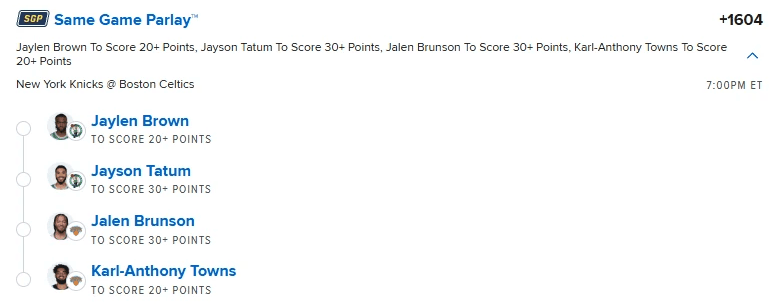
Correlation is the one edge casual bettors can sometimes exploit. If a quarterback throws for 350 yards, his team is more likely to win and the game is more likely to clear the total. Those outcomes move together. When a book lets you combine correlated legs without fully pricing that link, the parlay can carry real value. This is the logic behind same game parlays, though most sportsbooks now price SGP correlation aggressively, so the soft spots are narrower than they were a few years ago.
Staking Rules That Keep Parlays From Draining You
Even a well built parlay is a higher variance bet than a straight wager, so the staking rules matter more, not less. The lower your hit rate, the longer and deeper your losing stretches will run, and a normal unit size on a low probability bet burns through a bankroll quickly.
Cap parlay stakes at a small fraction of what you would risk on a straight bet, often a quarter unit or less. Keep a separate mental budget for entertainment parlays, the longshot slips you play for fun on a Sunday, and never fund those from your core bankroll. Mixing the two is how a fun habit turns into a real hole.
Track every parlay separately from your straight bets. Blending them hides how much the parlays are actually costing you. When bettors finally split the two in a tracker, the parlay column is almost always deep red, and that clarity alone changes how they size and select slips. Payout tables and SGP pricing also vary between books, so a book specific parlay approach can squeeze out small differences worth having.
Tools That Sharpen Parlay Decisions
The gap between a disciplined parlay bettor and a hopeful one usually comes down to one thing: whether they are checking their legs against real numbers or just running on gut feel. A couple of tools make that checking realistic instead of tedious.
Outlier is the tool I lean on most for parlay legs built from player props, which is what most same game parlays actually are. It models projections for props and flags when a posted line looks off, so you can build SGP legs around identified edges rather than guesses. Since correlation is where parlay value genuinely lives, having projection data on each prop leg is the closest thing to a real edge in this format. You can start with Outlier here.
For the odds side, OddsJam compares parlay and SGP pricing across sportsbooks so you are not leaving payout on the table, and its screens flag positive expected value plays worth a look. Between projections from Outlier and pricing from OddsJam, you can at least know whether a leg is defensible before it hits your slip. Neither tool turns parlays into a winning strategy on its own. They replace guesswork with numbers, which is all you can reasonably ask of any tool.
Common Parlay Mistakes to Avoid
Chasing Losses With Bigger Parlays
After a straight bet loses, the pull to win it back with a long parlay is strong and expensive. You end up taking a lower probability bet at a worse price at the exact moment you are least composed. The math does not care that you are behind, and the parlay is the worst vehicle for catching up.
Adding a Weak Leg to Boost the Payout
A three leg parlay you believe in becomes a four leg parlay because the bigger number looks better on the bet slip. That fourth leg is usually a coin flip you have no read on, and it drags the whole slip's expected value down with it. Every leg has to earn its place. If you would not bet it straight, cutting it almost always improves the parlay.
Trusting Odds Boosts and Parlay Insurance
Boosts and insurance offers are marketing, not gifts. Some carry real value and many do not. Run the expected value before assuming a promotion helps you, and stay honest that these offers exist because they make the book money on average.
Final Thoughts
So, are parlays worth it? As a primary strategy, no. The compounding margin makes them a slow leak for almost everyone who leans on them. As a specific tool used with discipline, they have a place. A parlay of genuinely positive expected value legs compounds your edge. A correlated same game parlay the book has mispriced can carry value. A small entertainment slip you have already budgeted to lose is a fine way to enjoy a Sunday.
The bettors who stay in the game treat parlays as the exception, not the plan. Keep the stakes small, check your legs against real numbers, and start from a clear understanding of how parlay payouts work before you build one. Used that way, a parlay is a tool. Used any other way, it is the sportsbook's favorite product for a reason.
Parlay Strategy FAQ

Additional Resources
Explore our curated selection of guides and tools to help promote responsible gambling.

Rugby Betting Guide: Union, League, Markets and Key Margins
How rugby union and league price differently, the markets worth betting, the 2026 calendar, and the tools that actually cover rugby.

Esports Betting Guide: Markets, Formats, and Finding Value
A practical esports betting guide covering markets, series formats, patches, line shopping, and the integrity and legal checks to run before you bet.

Regression Betting Explained: How to Stop Paying for Luck
How regression to the mean creates betting value, which stats in each sport snap back, and how to bet it without overreacting to streaks.

Betting Model Building Explained: From Raw Data to a Fair Price
Build a betting model that prices bets, test it against the market, and size what it finds.